

Sign up to hear about exhibitions and events.
This website uses a cookie to store your language preferences. By visiting this website you agree to the use of this cookie.
Welcome to the opening of Wolf Tones!
Saturday 3 October, 14:00–17:00
Mellomvegen 82
Free and open to all
15:00–15:30: We introduce the exhibition through a panel discussion moderated by Lydia Amarouche of Shed Publishing, with curators Myriam Amroun and Natasha Marie Llorens, and Camilla Fagerli, director of Tromsø Kunstforening.
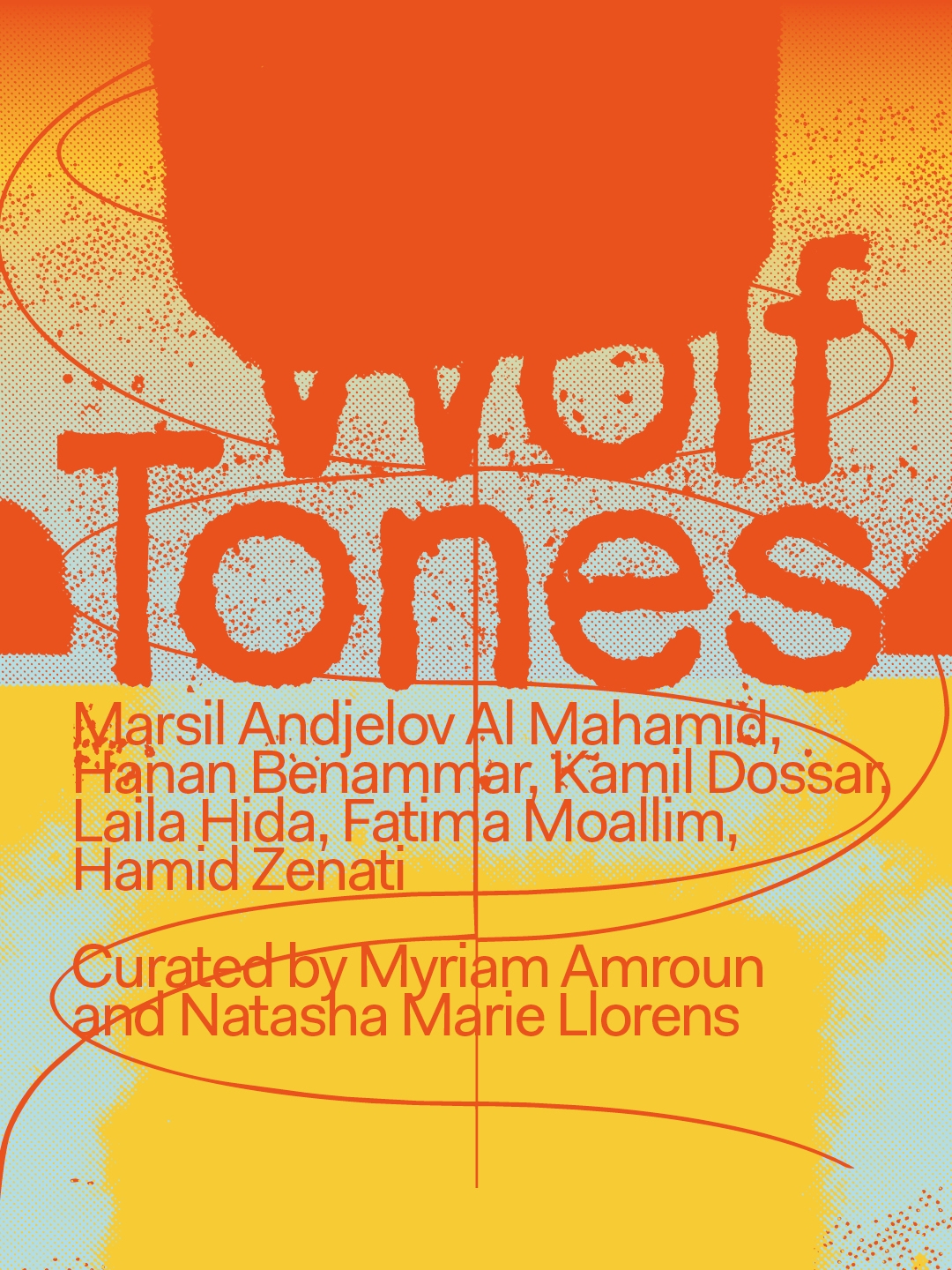
with Marsil Andjelov Al Mahamid, Hanan Benammar, Kamil Dossar, Laila Hida, Fatima Moallim and Hamid Zénati
curated by Myriam Amroun and Natasha Marie Llorens
A wolf tone is an irregular vibration that can occur in a musical instrument, such as a cello. It arises when the vibrations of the strings and the instrument’s wooden body come so close that they neither harmonise nor merge. The result is a recurring, howling sound – a form of friction and response that does not come from outside, but emerges from within the instrument itself.
The works in Wolf Tones hold similar tensions. They resist easy placement within established national and socio-political narratives, instead moving along their edges - between different places, histories, experiences and positions.
Central to the exhibition lies the tension between the categories of majority and minority. Not as fixed oppositions, but as porous, shifting and at times contradictory spaces. The majority establishes norms and systems that determine what is given space and how things are understood. The minority position shifts such frameworks - not necessarily through direct resistance, but through other ways of acting and thinking.
Through film, classical music, liturgy, and other systems for organising and understanding existence, the works create connections across such boundaries. The exhibition does not invite us into a single, unified narrative, but allows different perspectives, experiences and positions to exist simultaneously.
The title is drawn from Sara Nadal-Melsió’s book Europe and the Wolf. She uses the wolf tone as an analogy for that which cannot be harmonised – a dissonance that unsettles the idea of a unified and harmonious whole. In the exhibition, it becomes an entry point into artistic practices that create forms of friction or displacement within cultural systems of which they are themselves a part – destabilising established norms and narratives from within.
The works do not see history as a straight line from past to future. Instead, they open up other connections between what has been, what is, and what is yet to come. And to the possibility of imagining healing, repair and new ways of living in the wake of violence.
Each work can thus be understood as both a howl and a proposition.
Wolf Tones is curated by Myriam Amroun and Natasha Marie Llorens. The exhibition is the first in a cycle of four in an artistic research project funded by the Swedish Research Council, “Decolonization is Not A Metaphor.” The aim of this broader research is to flesh out the notion of “minor transnationalism” in curatorial practice as a critical approach to decoloniality in the arts.
The project has received support from OCA, Arts Council Norway, the Swedish Arts Council and the Danish Arts Foundation.
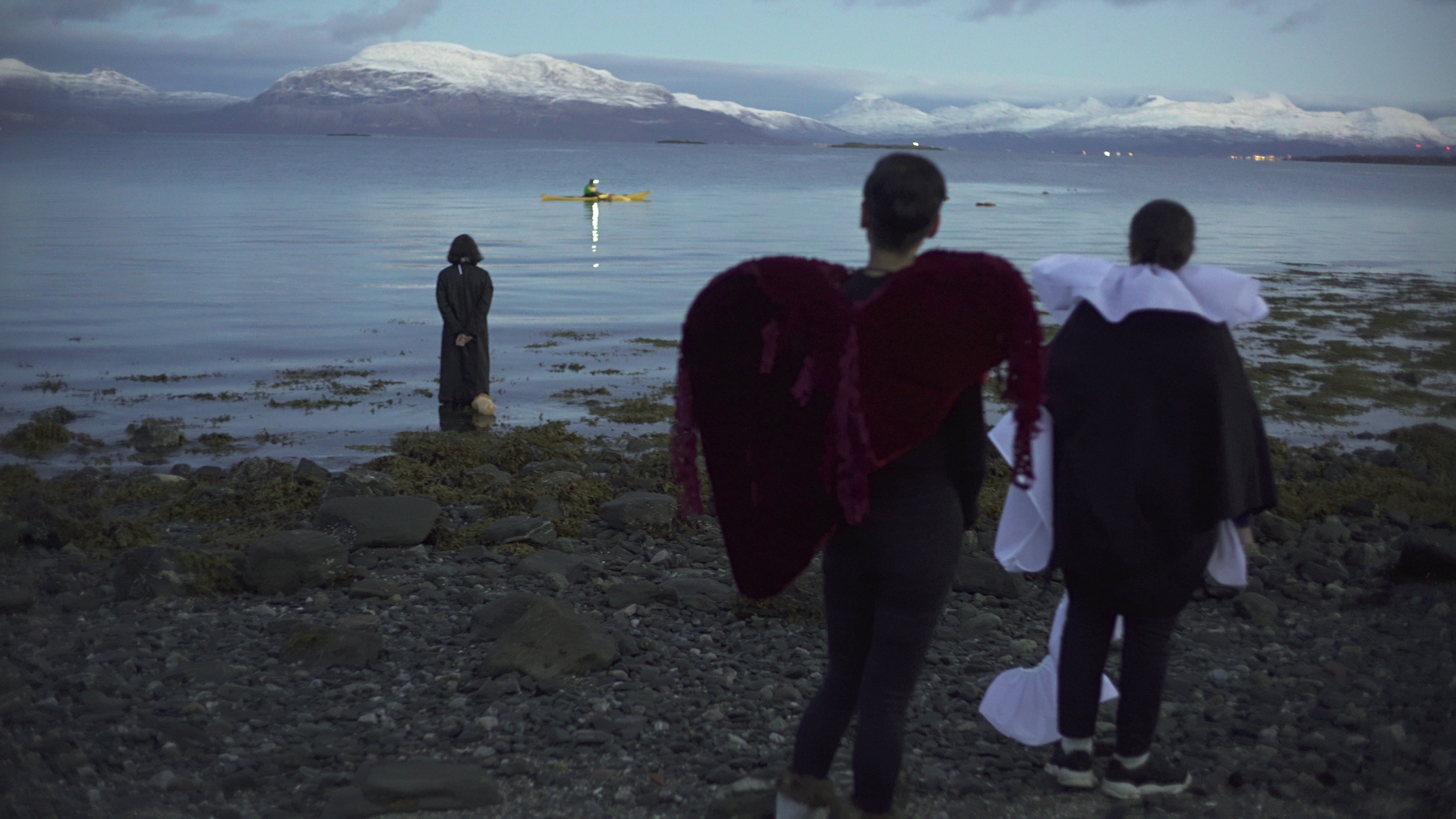
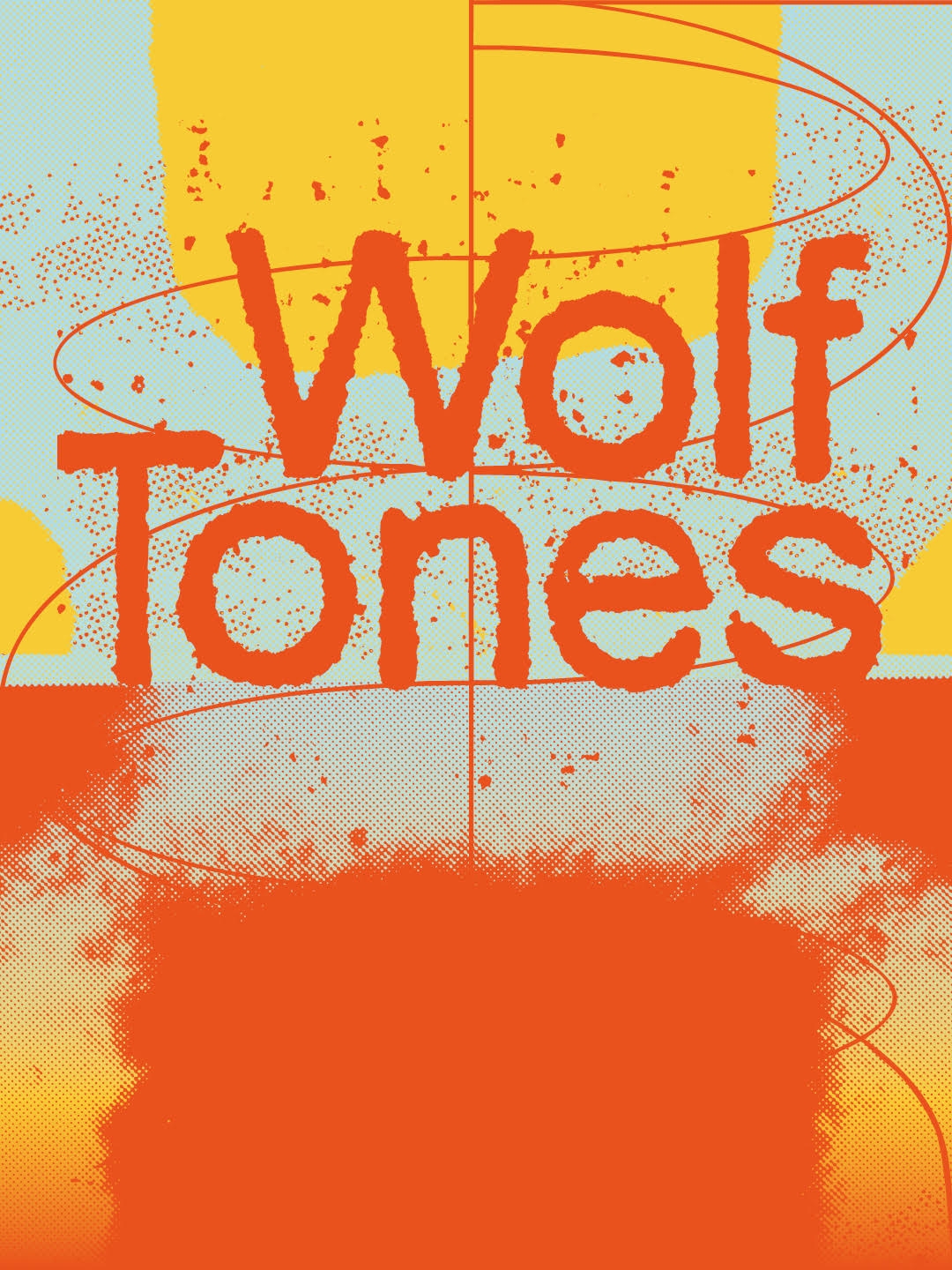
Graphic design: arc - 2nd image: Aqqalu Berthelsen, Cynthia Pitsiulak, and Hanan Benammar during the performance 'This Is Our Body' by Hanan Benammar, AMIFF, 2021. Picture by Kristian Skylstad